Avery Keller · 23 October 2026
Virtual Reality Labs Revolutionize Hands-On Learning in Polish Vocational High Schools
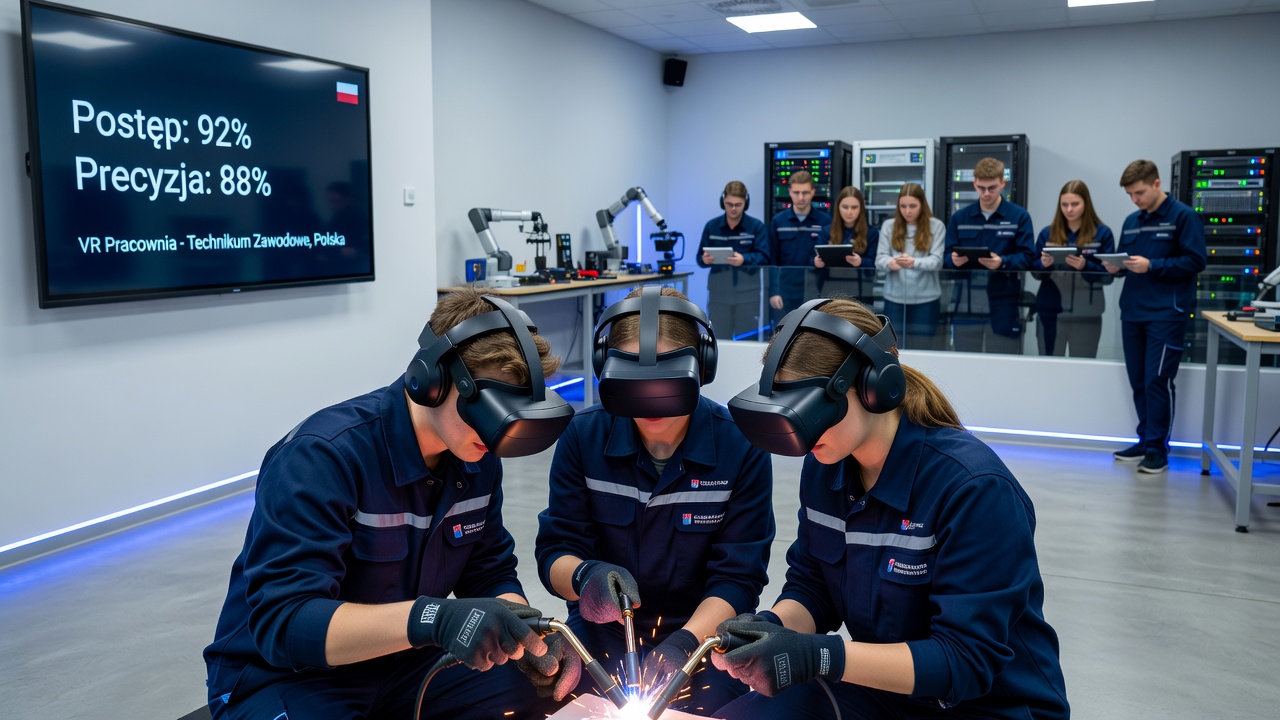
Virtual reality laboratories have entered Polish vocational high schools as a practical response to longstanding challenges in delivering equipment-intensive training, and data from the Ministry of Education and Science shows that over 180 such facilities operated across the country by mid-2026. These setups allow students in fields like automotive repair, electrical installation, and medical assistance to practice procedures without consuming physical materials or risking safety incidents, while schools report that simulation hours now supplement up to 40 percent of traditional workshop time in participating programs.
Expansion Patterns Across Regions
Deployment has concentrated in technical lyceums and vocational schools in both urban centers and smaller towns, with the Silesian and Lesser Poland voivodeships recording the highest numbers of installations according to regional education office statistics. Equipment typically includes standalone headsets, motion-tracking sensors, and custom software modules developed in cooperation with Polish technical universities, and funding has drawn from national digitalization grants alongside European Union recovery funds allocated for skills development. Observers note that rural schools have adopted the technology at rates comparable to city counterparts when grant applications emphasize alignment with local industry needs such as welding certification or CNC operation.
Training Applications in Specific Trades
In automotive programs, students manipulate virtual engine components and diagnose faults through layered simulations that replicate real-time sensor data, while electrical trainees navigate three-dimensional wiring diagrams that respond to incorrect connections with immediate visual feedback. Medical assistance courses use VR scenarios for patient handling and emergency response sequences, and these modules record performance metrics that instructors review during debriefing sessions. Research from the Warsaw University of Technology indicates that students who complete 20 hours of VR practice before physical equipment sessions demonstrate 25 percent fewer procedural errors in subsequent assessments, though results vary by trade and instructor integration methods.
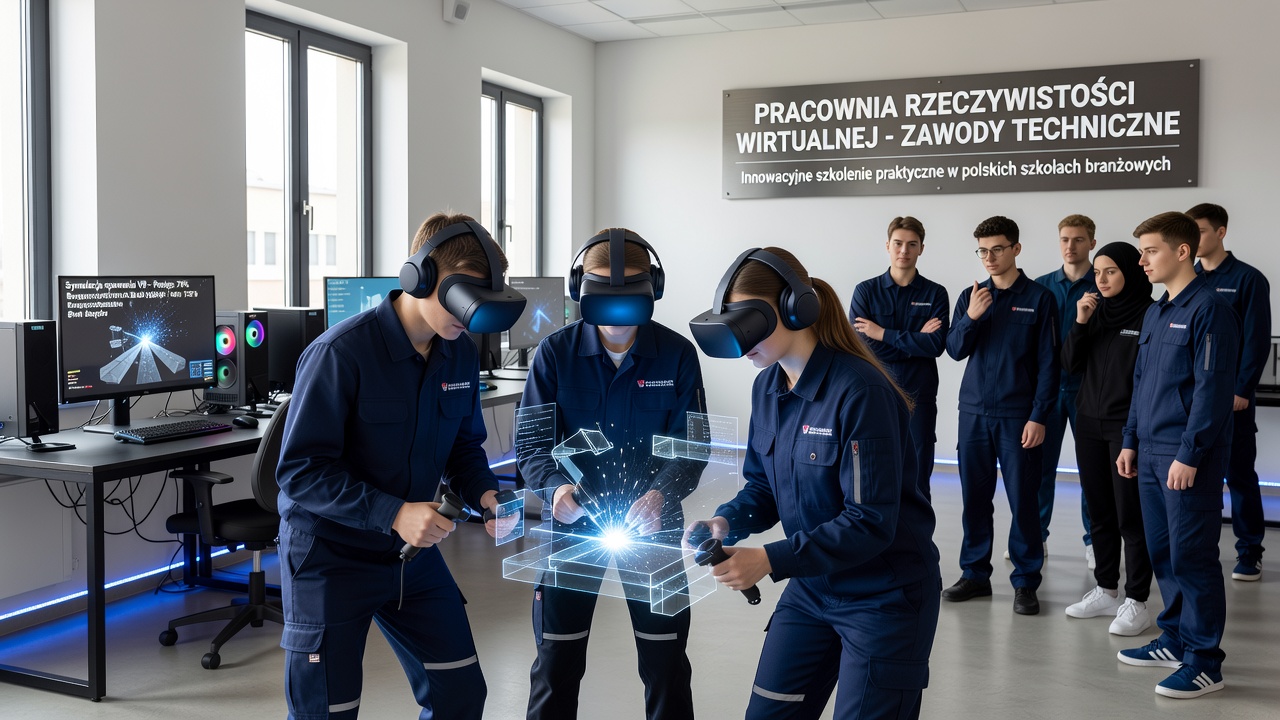
October 2026 marks the scheduled rollout of a coordinated national platform that will link individual school VR systems to a shared content library managed by the Central Examination Board, allowing standardized modules for common qualifications to update automatically across sites. This step follows pilot testing in 35 schools during the 2025-2026 academic year, where feedback from instructors highlighted the need for localized language support and adjustable difficulty levels that match Polish occupational standards.
Measured Outcomes and Institutional Data
Schools that introduced VR labs report higher retention rates in practical subjects, with one cohort study conducted by the Educational Research Institute in Warsaw tracking 1,200 students across 12 institutions and finding a 12 percent increase in pass rates on external skills examinations after two semesters of combined VR and workshop instruction. Equipment maintenance costs have declined because physical tools experience less wear during initial training phases, and administrators cite reduced insurance premiums tied to lower accident rates in simulated environments. Yet implementation timelines differ, since some facilities required building modifications to accommodate dedicated VR rooms with stable internet connections and climate control for prolonged headset use.
Teacher Preparation and Content Development
Professional development programs for instructors now incorporate VR-specific pedagogy modules offered through regional teacher training centers, and participants learn to sequence simulation exercises with real-world tasks while interpreting performance analytics generated by the software. Partnerships with software developers have produced Polish-language scenarios aligned with qualification frameworks from the Ministry, covering topics from hazardous material handling to precision measurement techniques. Those who've studied adoption patterns observe that schools with prior experience in digital tools integrate the labs more quickly, whereas institutions new to such equipment allocate additional planning time for network upgrades and curriculum mapping.
Industry and Certification Alignment
Employers in manufacturing and healthcare sectors have begun recognizing VR-based training hours toward apprenticeship requirements, and several automotive companies operating in Poland have contributed scenario designs that mirror their own assembly line protocols. This alignment supports smoother transitions from school to workplace, because students encounter familiar interfaces during job trials. Data compiled by the Polish Agency for Enterprise Development shows that vocational graduates from VR-equipped programs enter related employment at rates six percentage points above national averages for their cohorts, though multiple factors influence these figures beyond technology access alone.
Conclusion
Virtual reality laboratories continue to expand within Polish vocational high schools as institutions adapt curricula to combine digital simulations with physical practice, and the October 2026 platform launch will further standardize content across regions. Ongoing evaluations track long-term effects on skill acquisition and labor market entry, while schools balance initial setup investments against documented reductions in material consumption and safety incidents. The approach reflects broader European trends in technical education documented by European Commission reports on immersive learning tools, and Polish implementations contribute case examples to international discussions hosted by organizations such as the OECD Directorate for Education and Skills.